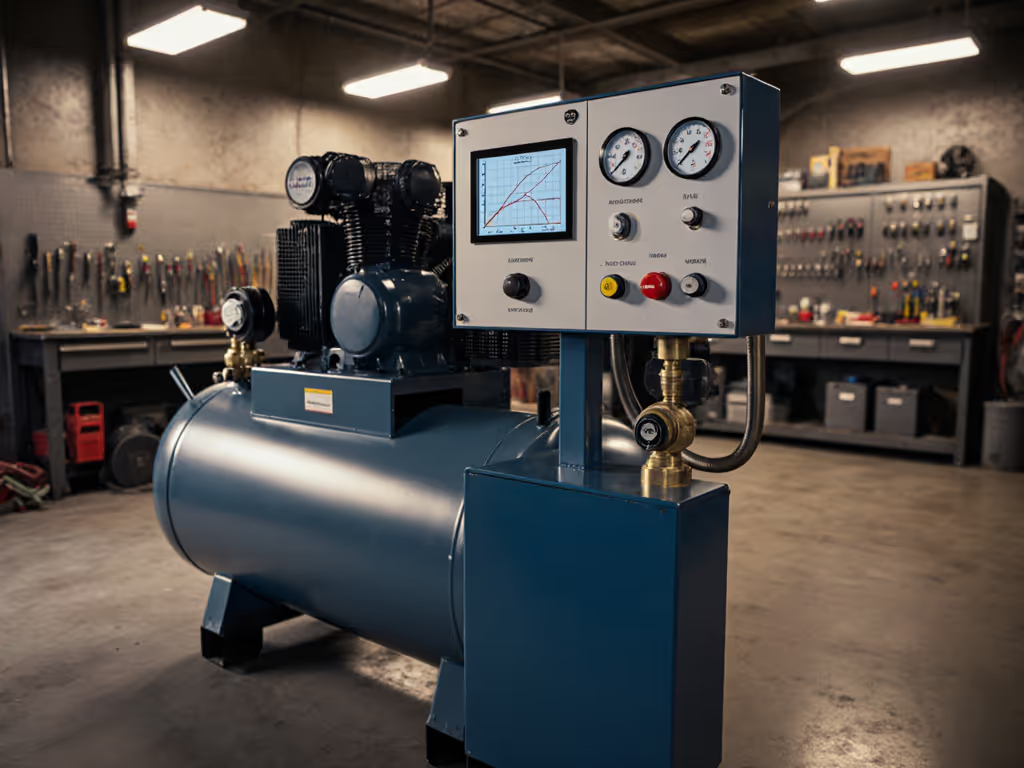
Optimize Air Compressor PID Control for Stability
30th Oct•6 min read
The journey of air compressor pumps reveals how far compressor technology evolution has come from simple bellows to today's precision systems. What matters most isn't the historical timeline itself, but how each innovation addressed the fundamental challenge: delivering consistent flow at working pressure. When evaluating any compressor generation, I always ask the same question: Show me CFM at 90 PSI, not brochures. This data-first approach reveals the true performance story behind the marketing, because if performance isn't proven at working pressure, it doesn't count. For a deeper breakdown of real CFM at working pressure, read our CFM vs PSI guide.
Before mechanical systems, metallurgists used hand and foot-operated bellows (1500 BC) to achieve concentrated air blasts for high-temperature fires. These early devices produced inconsistent flow with no pressure regulation, a severe limitation as industrial demands grew.
The first true mechanical compressor emerged in 1762 when John Smeaton designed a water wheel-driven blowing cylinder that slowly replaced traditional bellows. By 1776, John Wilkinson introduced a more efficient "blasting machine" that generated higher air pressure, becoming the prototype for all mechanical compressors. These early compressor designs were low-pressure systems with limited applications, primarily serving metallurgy and mining needs.
Key limitation: no standardized test conditions existed to measure actual performance at working pressure. Bench tests today would show these systems delivered minimal CFM at 90 PSI with poor duty cycles (constraints invisible to operators who only knew relative improvements over previous methods).
The Industrial Revolution transformed compressor needs from simple air delivery to precision power systems. When workers began digging the Mount Cenis Tunnel in the Swiss Alps in 1857, they initially cleared just 9 inches of rock per day using manual drilling. By 1862, compressed-air drills increased productivity dramatically, completing the project twice as fast as expected.
This shift revealed critical requirements for industrial compressors:
Factory floors soon adopted compressed air for sanding, painting, and assembly lines, applications demanding precise flow control. Early two-stage systems (1890s) improved efficiency by compressing air in successive cylinders, while the advent of portable compressors on wheels (1910) enabled construction of city skyscrapers using air-powered drills. The true measure of progress wasn't horsepower claims but whether these systems could deliver required CFM at 90 PSI for the specific task.
Measured, not marketed. That's the only metric that prevents tools from starving mid-task.
Four key compressor technological milestones transformed system reliability and performance:
Each innovation addressed the gap between theoretical capacity and working pressure performance. Early compressor designs often promised impressive "free air" delivery but failed to maintain flow at practical operating pressures. When I test systems, I note amperage at start and under load, report A-weighted dBA at a specified distance, and give CFM at multiple pressures, not just the optimistic free air rating. This protocol reveals what really matters: how much usable air you get at the tool.
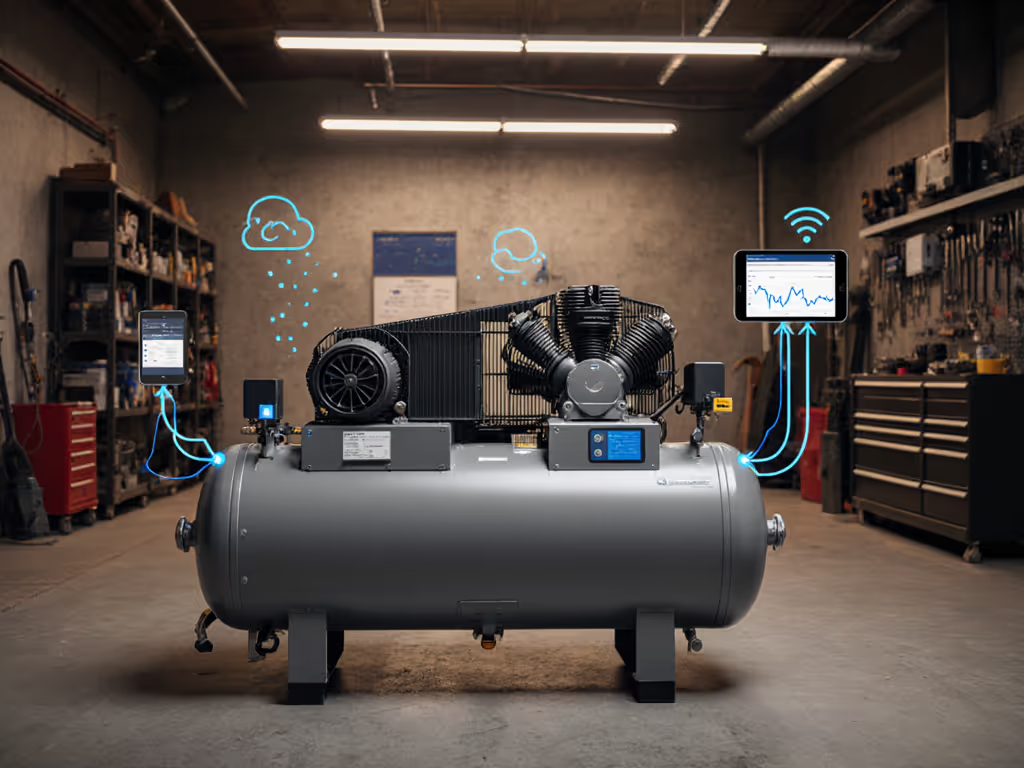
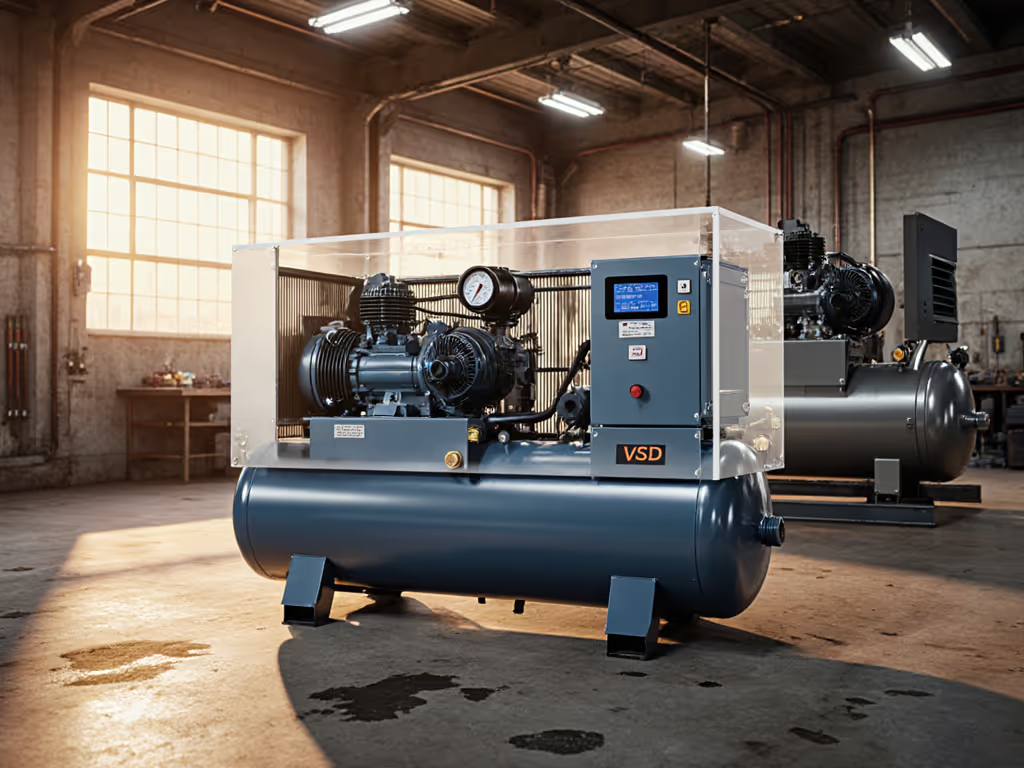
Modern compressor innovations focus on efficiency, precision, and system integration, not just raw output. Variable Speed Drive (VSD) systems represent the current frontier, dynamically adjusting motor speed to match air demand. Unlike fixed-speed compressors that cycle on/off, VSD units maintain consistent pressure while reducing energy consumption by 35-50% in partial-load applications.
Recent advancements address the pain points that stall real-world productivity:
I recall a contractor who dropped off two '5 CFM' units that stalled his DA sander, testing revealed 3.2 CFM and 4.8 CFM at 90 PSI. The bottleneck wasn't the compressor itself but undersized quick-connects and a restrictive regulator. When we upsized the fittings, uptime jumped immediately. If you're chasing pressure drop or starving tools, start with our air compressor troubleshooting guide to find leaks and flow restrictions fast. This is why compressor evaluation must include the entire system: tank, lines, regulators, and filters, not just the pump's brochure specs.
Evaluating compressor technology across different eras requires consistent metrics that matter at working pressure. When comparing vintage piston compressors to modern VSD systems, focus on these verified measurements:
State ambient temp, voltage, hose ID, and test conditions, otherwise spec comparisons are meaningless. A vintage two-stage compressor rated at 5 HP might deliver 12 CFM at 90 PSI with proper maintenance, while a modern 2 HP oil-free unit could outperform it with 14 CFM at the same pressure due to thermal management advances.
For prosumers and tradespeople, the question isn't which compressor generation is "best" but which delivers verified performance for your specific workflow. When I map CFM-at-pressure curves across complete air systems, I consistently find that bottleneck elimination, not raw compressor power, determines real-world productivity. A well-designed system with properly sized components will outperform a larger, poorly integrated setup every time.
Your compressor's value isn't measured by tank size or peak HP claims, but by the uninterrupted workflow it enables. Whether you're running a DA sander, HVLP spray gun, or impact wrench, the system must deliver proven CFM at your actual working pressure, no matter what generation technology powers it. That's the enduring lesson from four centuries of compressor technology evolution.
Further Exploration: For those interested in optimizing their current compressor setup, focus on measuring your actual tool demands at working pressure. Document ambient temperature, voltage supply, and hose specifications during testing, then compare against your system's verified performance data. Remember: the most advanced compressor technology only matters when it delivers measurable results at the point of use. To right-size your setup and eliminate CFM starvation, follow our air compressor sizing guide.