VSD Retrofit for Legacy Compressors: Payback Data
7th Mar•7 min read
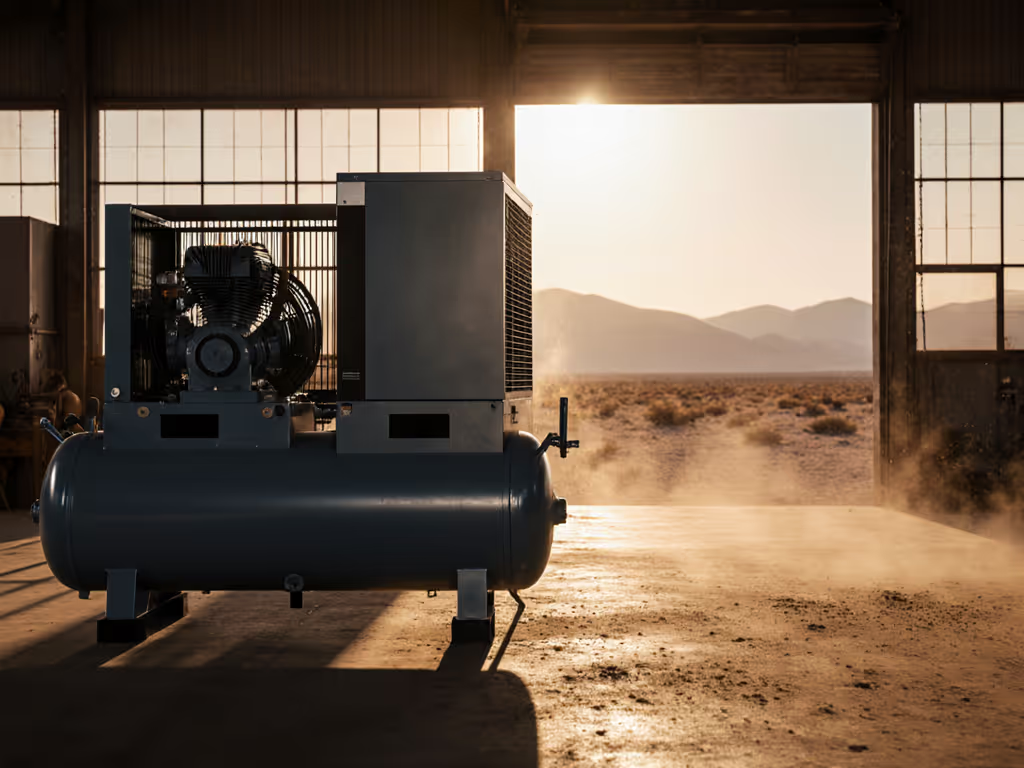
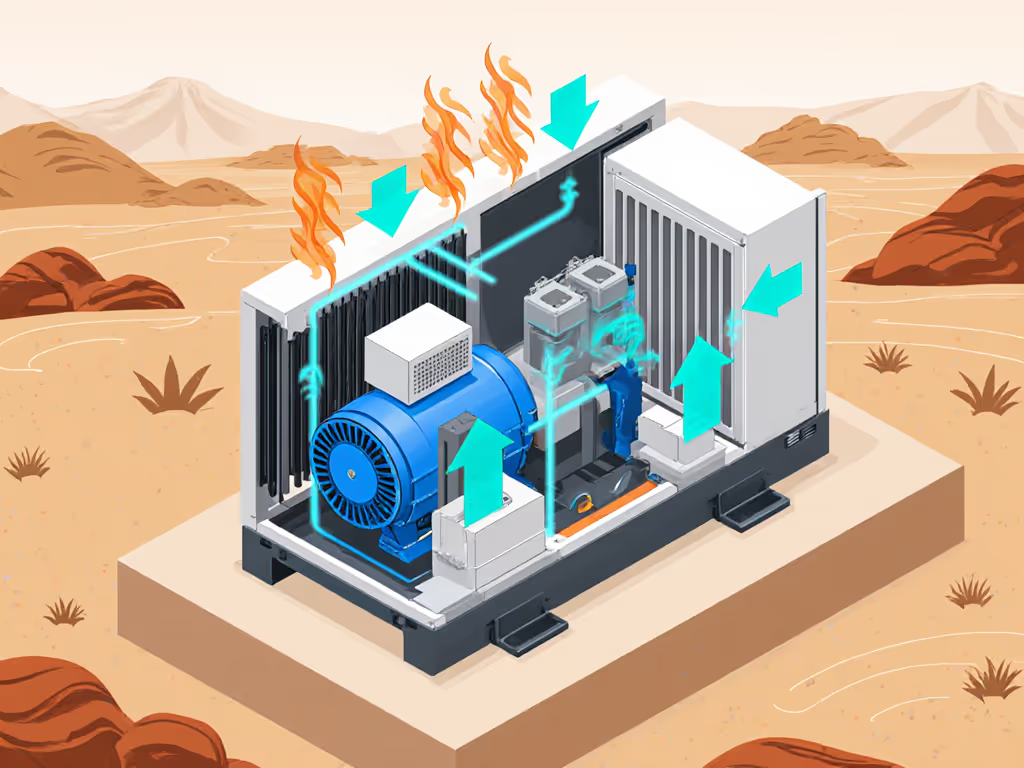
Working in desert environments or arid climates presents unique challenges for compressed air systems. When ambient temperatures exceed 40°C (104°F) and dust penetrates every crevice, desert environment compressor design and high temperature air system optimization become essential to maintaining uptime, air quality, and operator safety. This FAQ digs into the practical realities of running air systems where heat and dust are not exceptions (they are the default).
Hot air is fundamentally less dense than cool air, containing less oxygen per unit volume. This directly reduces the engine's power output and the volume of air the compressor can deliver, sometimes by 10-15% or more at extreme ambient temperatures. Simultaneously, the compressor's cooling system works harder to shed heat; if cooling capacity is inadequate, discharge temperatures can climb toward or exceed the manufacturer's safe operating window. A standard air-cooled compressor rated for 40°F to 100°F ambient temperature will begin to struggle significantly above 100°F, and risk thermal shutdown in sustained desert heat. For ambient derating math and corrections, see our hot and cold climate CFM guide.
Beyond raw airflow loss, heat stress accelerates component wear. Bearings, seals, and electronic controllers are all rated to specific temperature limits. Exceed those limits, and failure sequences accelerate. The result: unplanned downtime precisely when you need the compressor most.
Start by determining your actual CFM requirement at your working pressure (not at free-air delivery). Once you know that, consult the compressor manufacturer's correction factors for your worst-case ambient temperature. A unit rated for 1500 CFM at 100°F will deliver measurably less at 120°F or higher.
The approach temperature is critical: this is the difference between the ambient air temperature and the compressor's discharge temperature. In hot climates, approach temperatures are typically 15°F to 20°F or higher. If your ambient is 115°F and approach is 20°F, you're looking at a 135°F discharge temperature, which is dangerously close to or exceeding the 120°F maximum inlet temperature many refrigerated dryers can tolerate. High discharge temperatures also reduce dryer capacity significantly; even at 100°F inlet, dryer performance begins to derate. Compare air dryer technologies to choose a solution that holds dew point at elevated inlet temperatures.
Oversizing coolers (not just the compressor) is the measured path to reliability. Many manufacturers serving hot climates, including those operating in Middle Eastern pipeline projects with 45°C ambient temperatures, deploy enhanced cooling systems with larger heat exchangers and robust fan designs to maintain stable discharge temperatures. If the compressor room is poorly ventilated or the cooler exhaust recirculates hot air, cooling performance collapses; airflow path and cooling clearance matter as much as component size.
Desert environments are simultaneously dry and dusty, a deceptive combination. While low relative humidity reduces condensation risk in some scenarios, airborne sand and dust are relentless. Fine particles bypass standard air filters if they are not properly rated or if maintenance is neglected. Once dust enters the compressor, it acts as an abrasive; on valve seats, piston rings, and cylinder walls, it accelerates wear and can cause rapid failure.
The Atlas Copco XATS 350, deployed in Egypt's Upper Nile region for 5 years under 12-hour daily duty in 47-50°C heat and frequent sandstorms, has proven that heavy-duty air filtration removes dust and sand contaminants before entry. Arid climate compressor maintenance begins with filter selection: ask for ISO 4406 cleanliness ratings and replacement intervals. Do not defer maintenance to save money; contaminated air destroys pneumatic tools far faster than any upfront filter cost.
While humidity is low in true deserts, any moisture that condenses in cooler discharge lines or in the tank will collect with dust and form an abrasive slurry. Even low-humidity air can carry residual moisture; an aftercooler and auto-drain valve eliminate this risk and are non-negotiable in any portable or fixed desert installation.
A compressor is a heat engine: it generates more waste heat than useful compressed air. Sealing it in a closed box without ventilation will cause rapid thermal failure, an intuitive mistake that many first-time users make. Instead, design for airflow path and cooling clearance: the compressor's intake and exhaust must breathe freely.
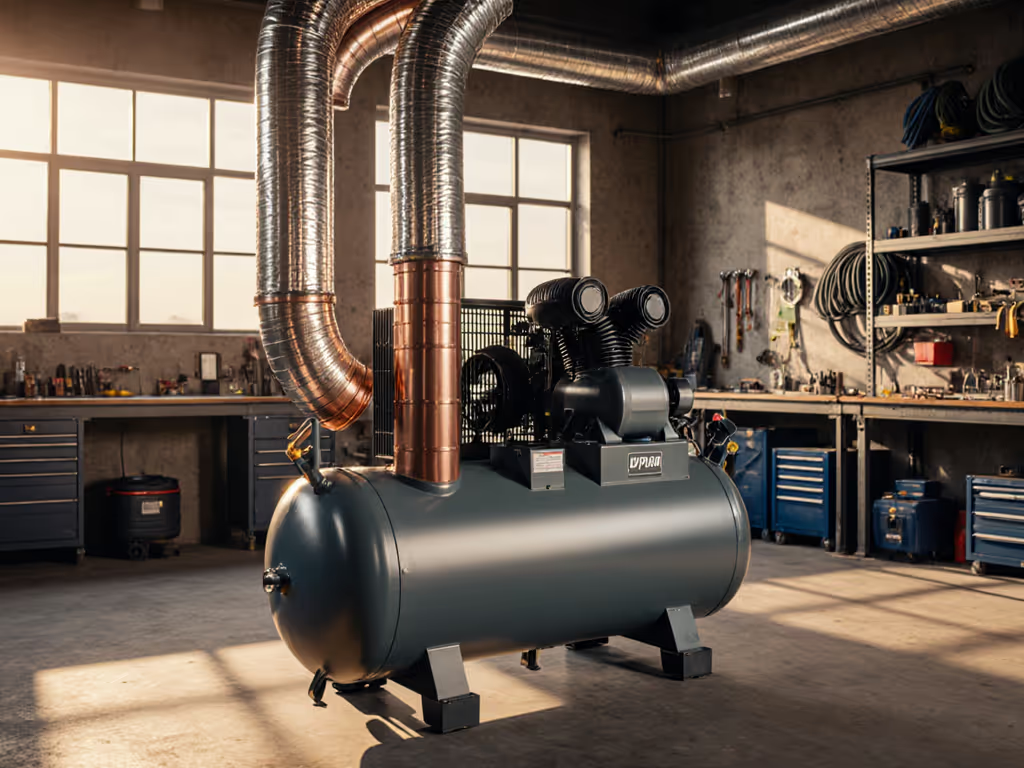
I once worked with a cabinet shop that assumed noise and heat were inseparable. We relocated their reciprocating compressor into a ventilated closet, floated it on vibration isolation pads, and ducted a lined intake from outside and a lined exhaust through a check valve. The result: measured dBA dropped by 12 at 1 meter. Conversations returned, fatigue fell, and quality improved. Quiet isn't luxury; it's throughput and focus you can hear.
The principle applies in deserts: if ambient air is 120°F, pulling that hot air into the compressor is thermally wasteful. Design intake ducting to draw from the coolest available source (early morning, shaded, or even cooler depth if in a canyon or valley). Exhaust hot discharge air away from the intake and away from work areas. Use flexible, lined ducting to attenuate compressor noise while managing thermal paths. Specify cooler bypass piping so air can flow freely during full-load operation. Ventilate the quiet.
For mobile rigs or remote jobsites with limited infrastructure, start with a water-cooled compressor if duty cycle and runtime justify the added complexity. If overheating is a persistent risk, review our air vs water-cooled comparison for pros, cons, and maintenance needs in extreme heat. Water-cooling maintains discharge temperatures in the comfort zone (what engineers call the Goldilocks zone) far more reliably than air-cooling in sustained 50°C ambient.
If water-cooling is not feasible, prioritize an oversized aftercooler and refrigerated dryer sized for corrected capacity at high ambient and high discharge temperature. Add thermal monitoring: a discharge temperature gauge or alarm will alert you before overheat shutdown occurs. Stage compressor loading: two smaller units running alternately often reject heat more effectively than one large unit running continuously.
Tank placement matters too: position the tank where shade and air movement naturally cool it, and insulate it if necessary. Every degree reduction in tank temperature improves downstream air quality and downstream equipment performance.
Hot, dusty conditions compress (literally) the maintenance calendar. Use our maintenance schedule by type to set heat-adjusted inspection and service intervals. Increase filter inspection to weekly or bi-weekly rather than monthly, especially in active sandstorm seasons. Clean or replace air filters aggressively; a clogged filter forces the engine to work harder, raising internal temperature.
Check the cooler fins weekly for dust buildup; a thin dust layer acts as insulation. Brush or blow them clean. Drain the tank and aftercooler daily or every two shifts in truly harsh environments; moisture and dust settle rapidly, and allowing them to accumulate will corrode the tank and foul the compressor pump.
Review manufacturer guidance on oil change intervals for high-temperature duty; some suppliers recommend more frequent intervals in sustained heat. Use the correct viscosity grade for your climate: winter-grade oil in cold starts, high-temperature oils for heat.
Low humidity effects on air systems are subtle but real: dry air can make some synthetic gasket materials brittle over months, so inspect hose and fittings for cracks and replace preemptively if you notice any weeping or seepage.
Desert air system optimization is a systems problem. Oversized coolers, robust filtration, clear airflow paths, active thermal monitoring, and a disciplined maintenance rhythm are not optional niceties; they are the foundation of uptime and safety in extreme heat. The compressor is one component; the enclosure, ducting, controls, and post-coolers are equally critical.
If your current setup is struggling in heat or dust, audit the intake and exhaust paths, the cooler size relative to ambient and load, and the filter condition. Often, relief comes not from replacing the compressor but from ventilating it properly and matching cooling capacity to the real thermal load your environment demands.